
Rethinking
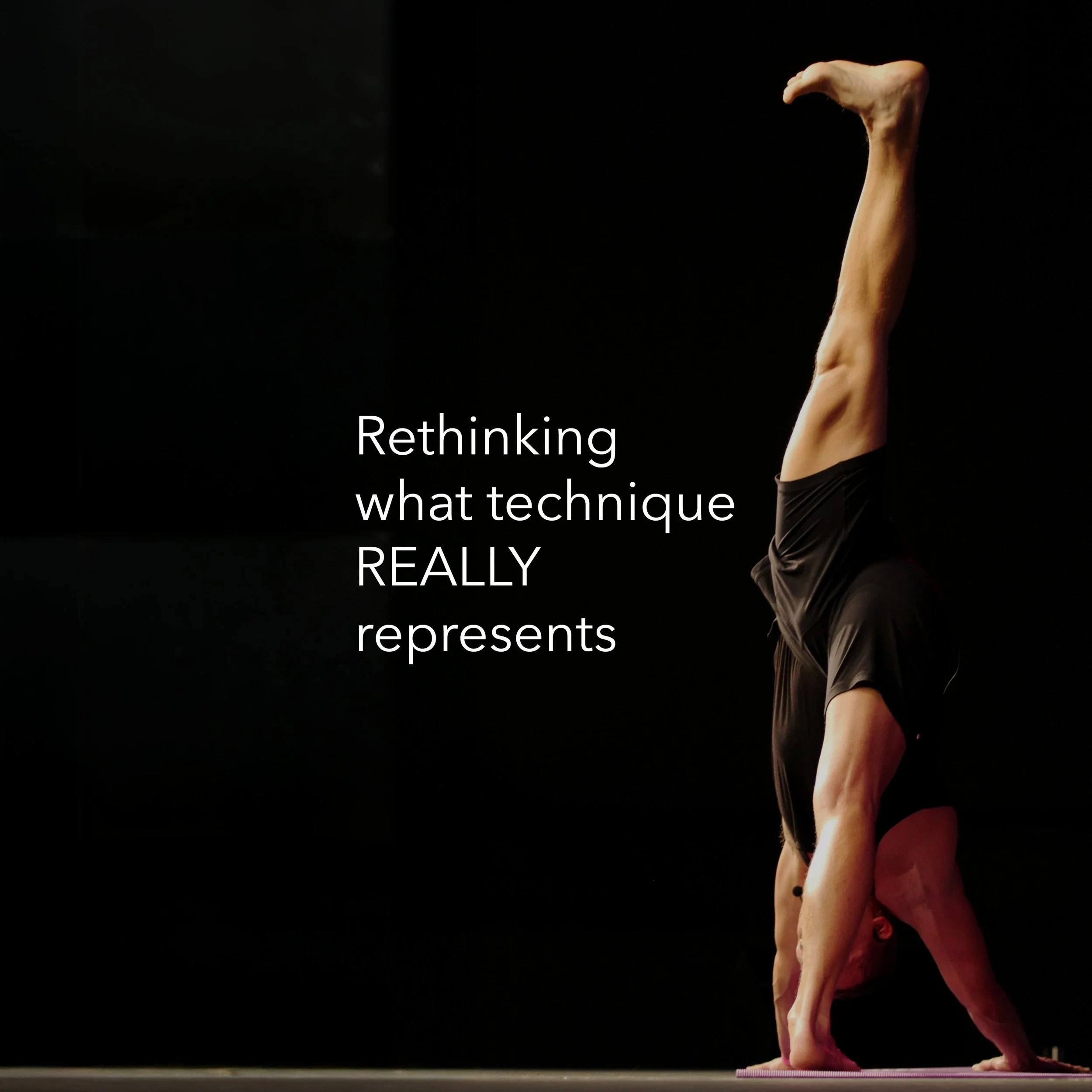
Photo: Tore Amundøy
Fitness, yoga, pilates, and rehabilitation community
I held a lecture a couple of days ago with movement teachers from different disciplines (fitness, yoga, pilates, rehabilitation). One thing that is widespread in most techniques is the belief that maintaining a very detailed and specific way of moving is always safe and will prevent any type of injury or pain.
There is also a common belief that deviating from these specific ideas of alignment is really bad and will directly lead to a negative outcome.
A technique
A technique is a specific, practical method or way of performing an activity. There’s nothing wrong with having a particular way of moving, but what’s often overlooked is the large, normal variation in movement patterns. Our walking style is like a fingerprint—unique to each individual and even variable within the same person over time. Movement in real life can be random, messy, and unpredictable, while our exercise set-ups tend to be very strict and micromanaged.
It’s complex
The reasons for injury and pain are complex and go far beyond simply having "perfect technique." They are influenced by many factors, both internal and external—such as recovery, stress, load management, and belief systems. While some of these factors are known, it is important to remain open to the idea of the unknown and to accept a degree of uncertainty.
What a technique really represents
Many of the techniques I have learned over the years have reflected tradition, the unique movement style of the teacher, limitations of the equipment (such as a yoga mat, cable machine, or gym apparatus), and old beliefs about safety (like 90-degree angles, plumb line placement, or a neutral pelvis). Most of the time, these techniques were also shaped by aesthetics—lines and a set idea of perfection.
When I give a yoga workshop, I usually ask how the asanas (exercises/movements) would be executed differently with a round-shaped mat or with no mat at all.
I think many techniques have a particular way of moving due to reasons linked to pedagogy. Teaching movement variability is more difficult compared to presenting only one option. Teaching movement in a large group of people requires a delivery method that represents efficiency and is easy-to-follow.
"This is how I was taught, and I was also not allowed to question it."
Some techniques were originally based on individual rehabilitation protocols and later transferred to group exercise fitness environments.
Other techniques were designed to enhance performance in sports and then adapted for use in exercise routines for unhealthy, sedentary office workers.
Some techniques were originally based on one teacher's movement DNA (and their own interest and obsessions) and were later transferred to a very versatile demographic. The same teachers also changed the exercises because of ongoing injuries and obstacles to fit their own agenda.
Some techniques were created with a very polarized message of a right way of moving and a wrong way. This made the message easy to understand, but also left important knowledge out of the conversation.
I think many movement schools wanted to teach “safe” and simply copied what others did.
Isn't it interesting?! What a technique really represents.
➡
Stay open to the idea that there is much more nuance than simply labeling movement as "good" or "bad."
Movement patterns naturally vary between individuals and even within the same individual over time.
Embracing this variability allows for a more flexible and realistic approach to movement and exercise.
Don’t forget to ask the most important question; why?
//Magnus Ringberg