Tutorial
This is a movement tutorial featuring one exercise from my loaded flexibility and elastic workshops. It’s essentially a combination of three movements in one (similar to a Kinder Egg): a spinal roll-down, a single-arm shoulder press, and a leg and spine movement. Ensure you have enough space to move sideways, as the exercise requires room for the full range of leg movements in three directions.
You can use any type of load; in the tutorial, I am using a dumbbell. Choose a load that you can maintain comfortably for a reasonable amount of time during an overhead press. Keep your arm mostly vertical throughout the sequence, but note that the degree of shoulder rotation will vary depending on the movement of the rest of your body.
You can either set up a routine with a specific number of repetitions on the same side or alternate sides between each repetition.
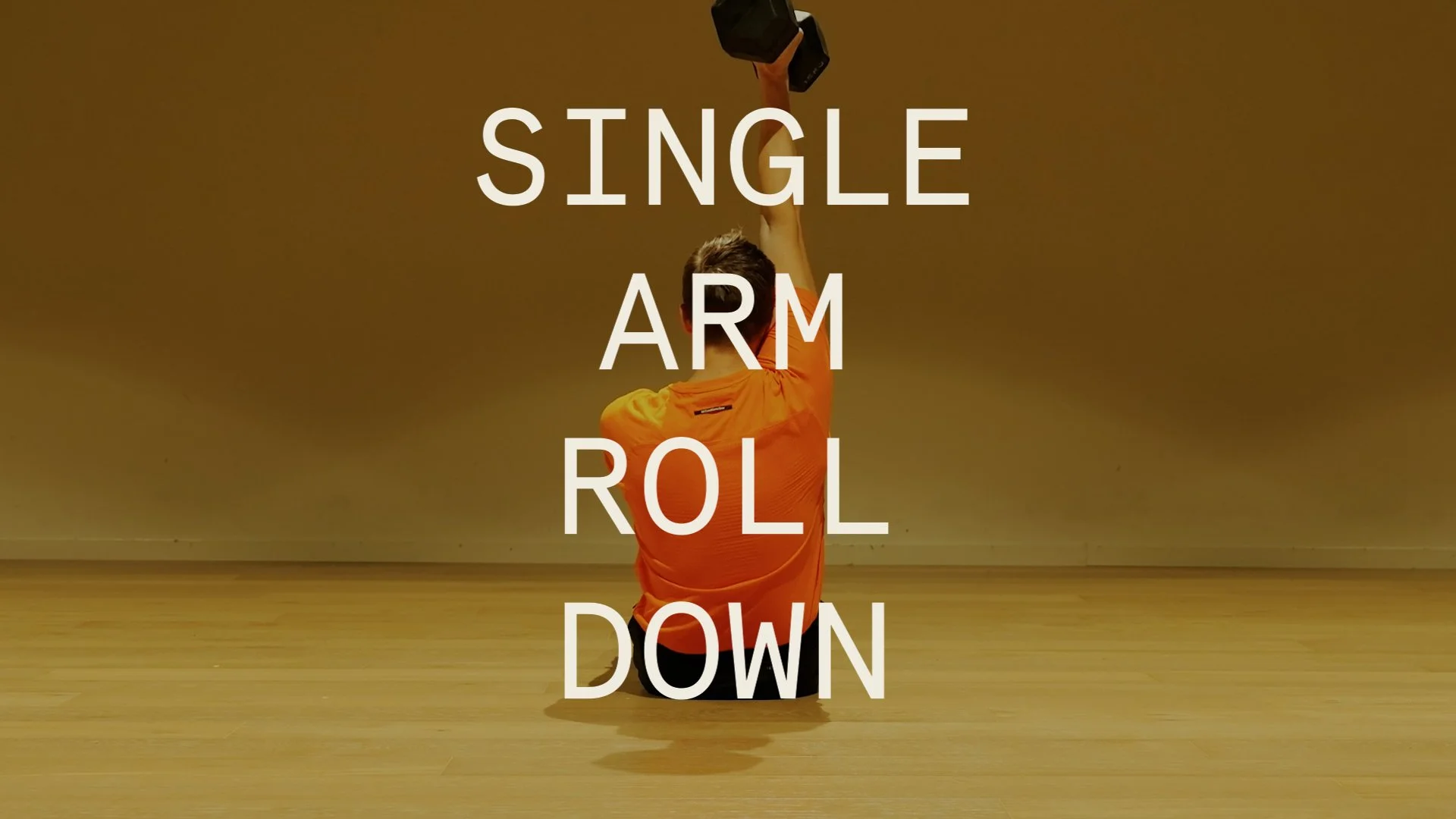
🏁 Begin in a seated position, holding a dumbbell overhead with one arm
1 Roll down
Tilt the pelvis posteriorly and continue to move into flexion through the rest of the spine. Anchor the legs firmly and maintain the arms vertically, or extend them forward to counterbalance the body weight as you lean back
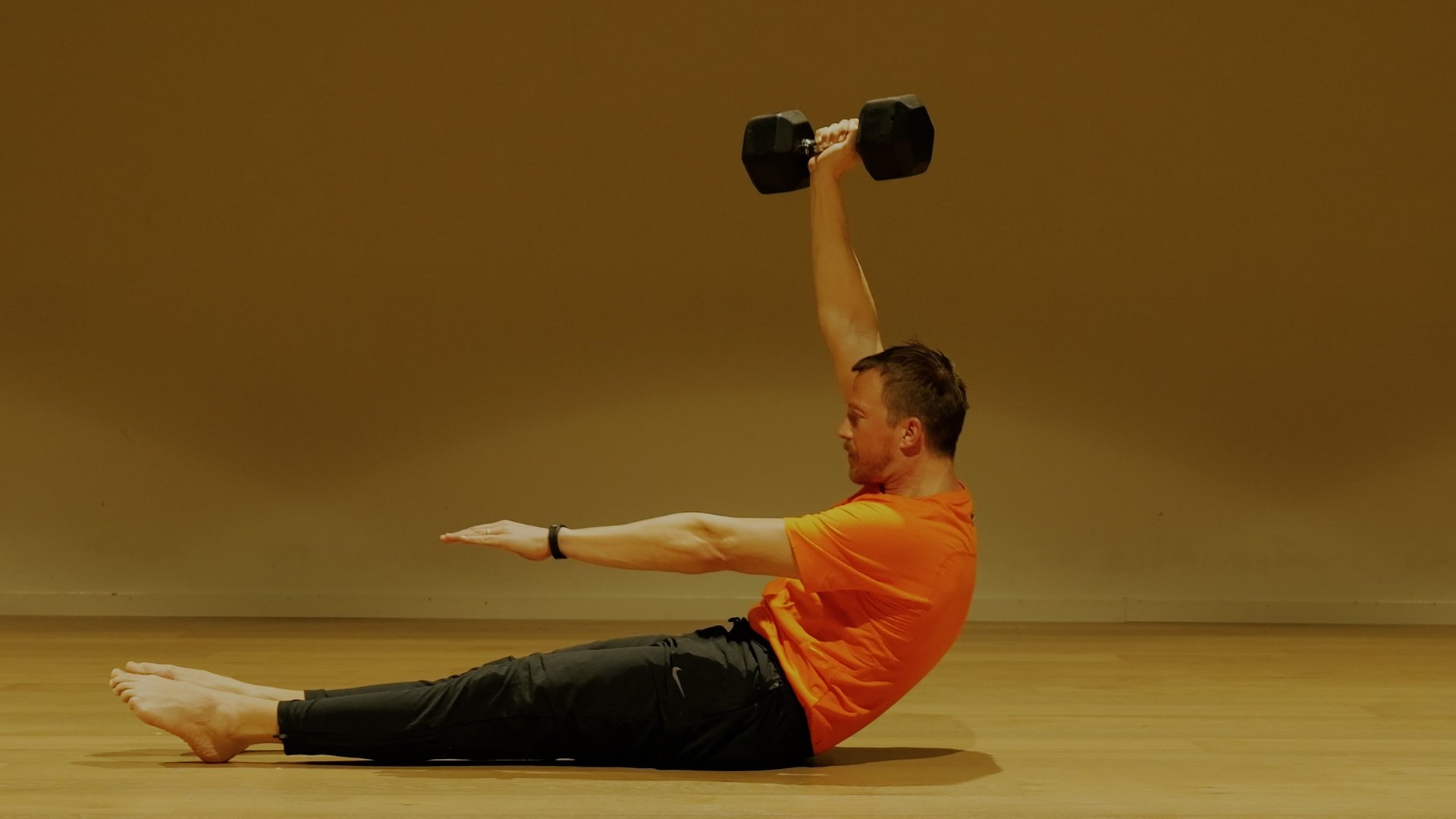
2 Arm to the side
Place the non-weight-bearing arm to the side (shoulder level) with the palm facing either down or up. This positioning will create either external or internal shoulder rotation.
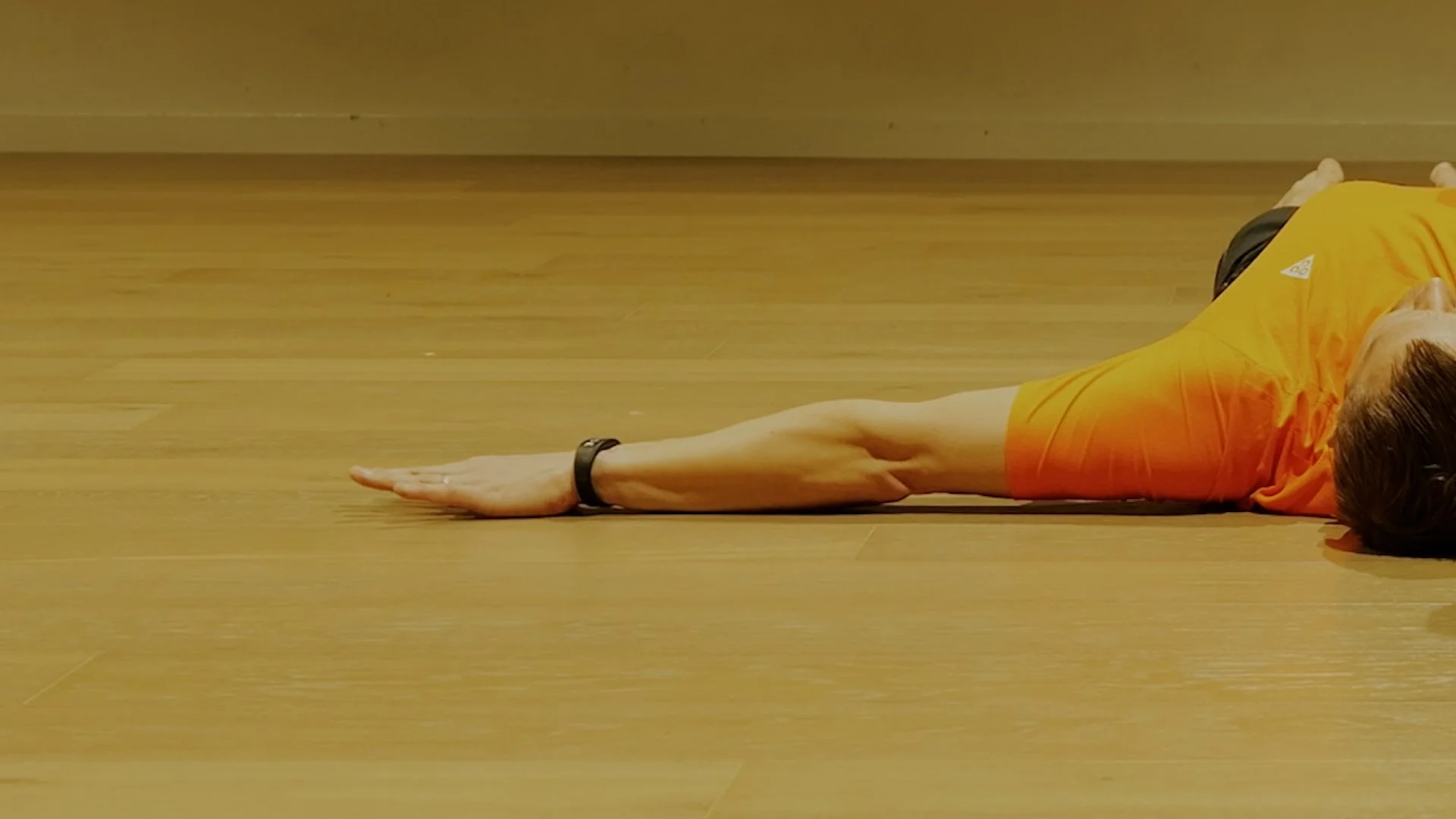
3 Leg lift
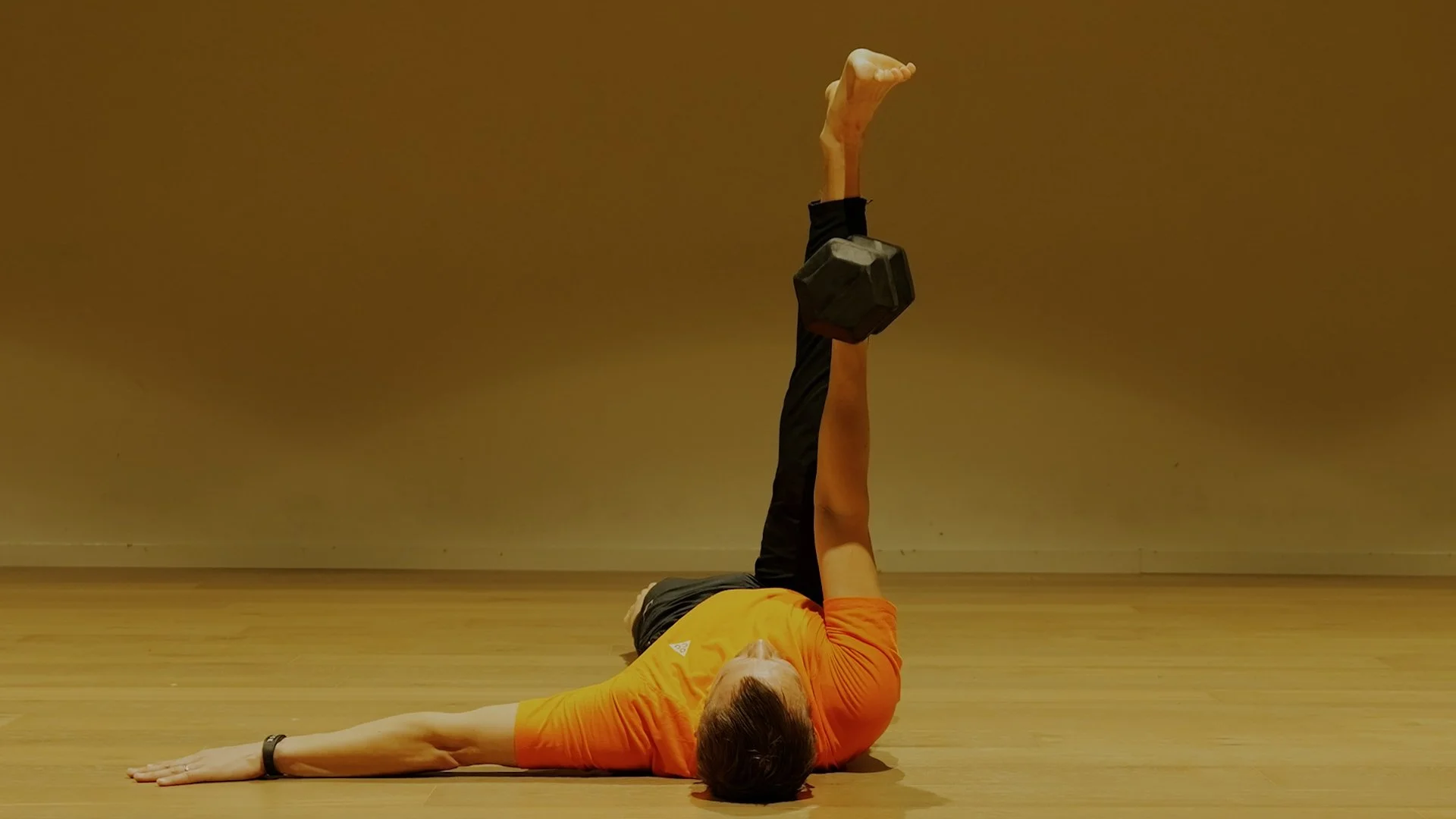
Elevate the leg into hip flexion (on the same side as the arm holding the dumbbell), keeping the foot in dorsiflexion and the knee extended.
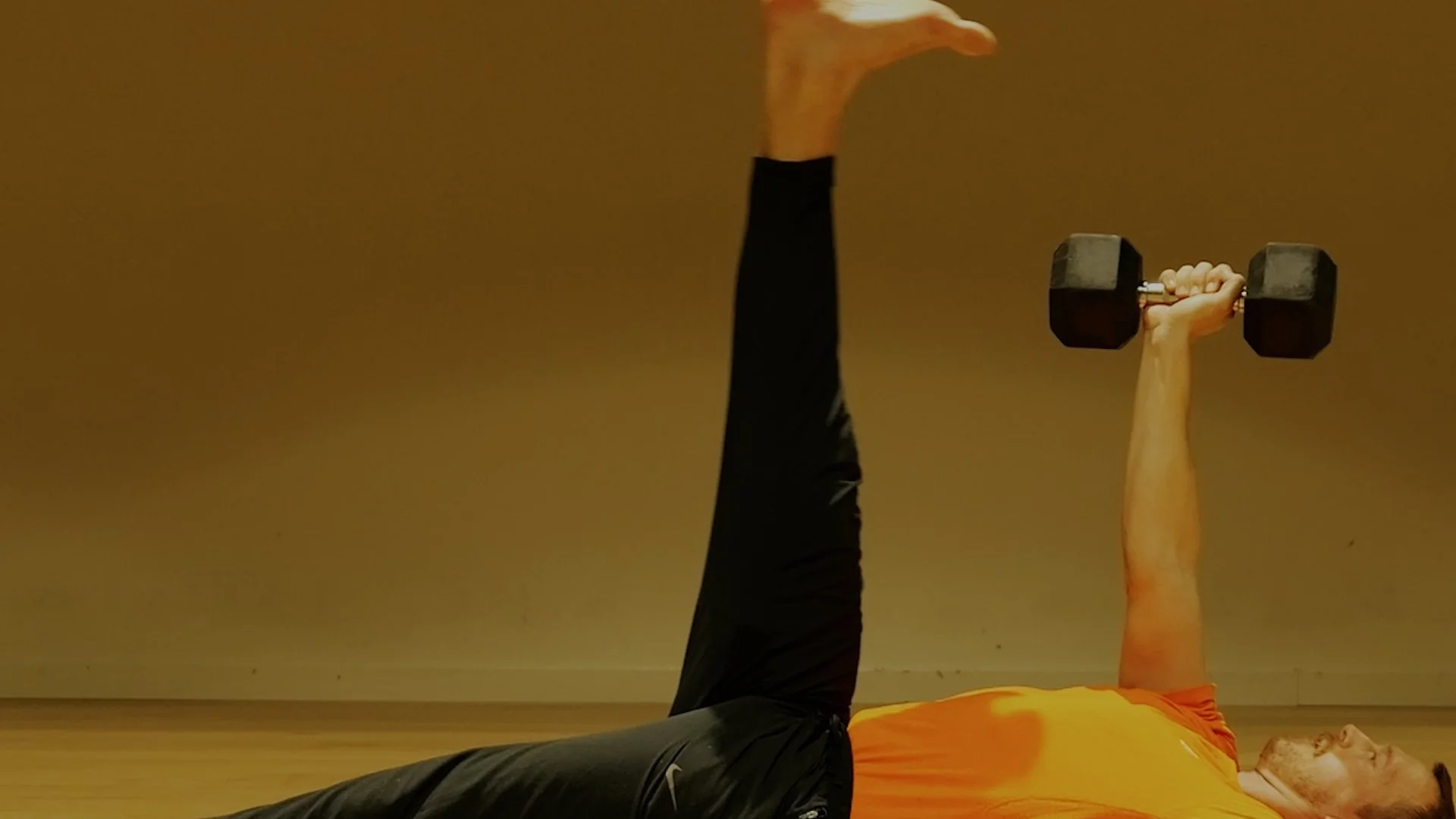
4 Tilt the leg
Tilt the leg sideways into hip adduction, then continue to roll off the hip from the ground while rotating thespine from the lower to the upper regions. Keep the loaded shoulder on the ground for as long as possible. At one point, place your foot on the ground.
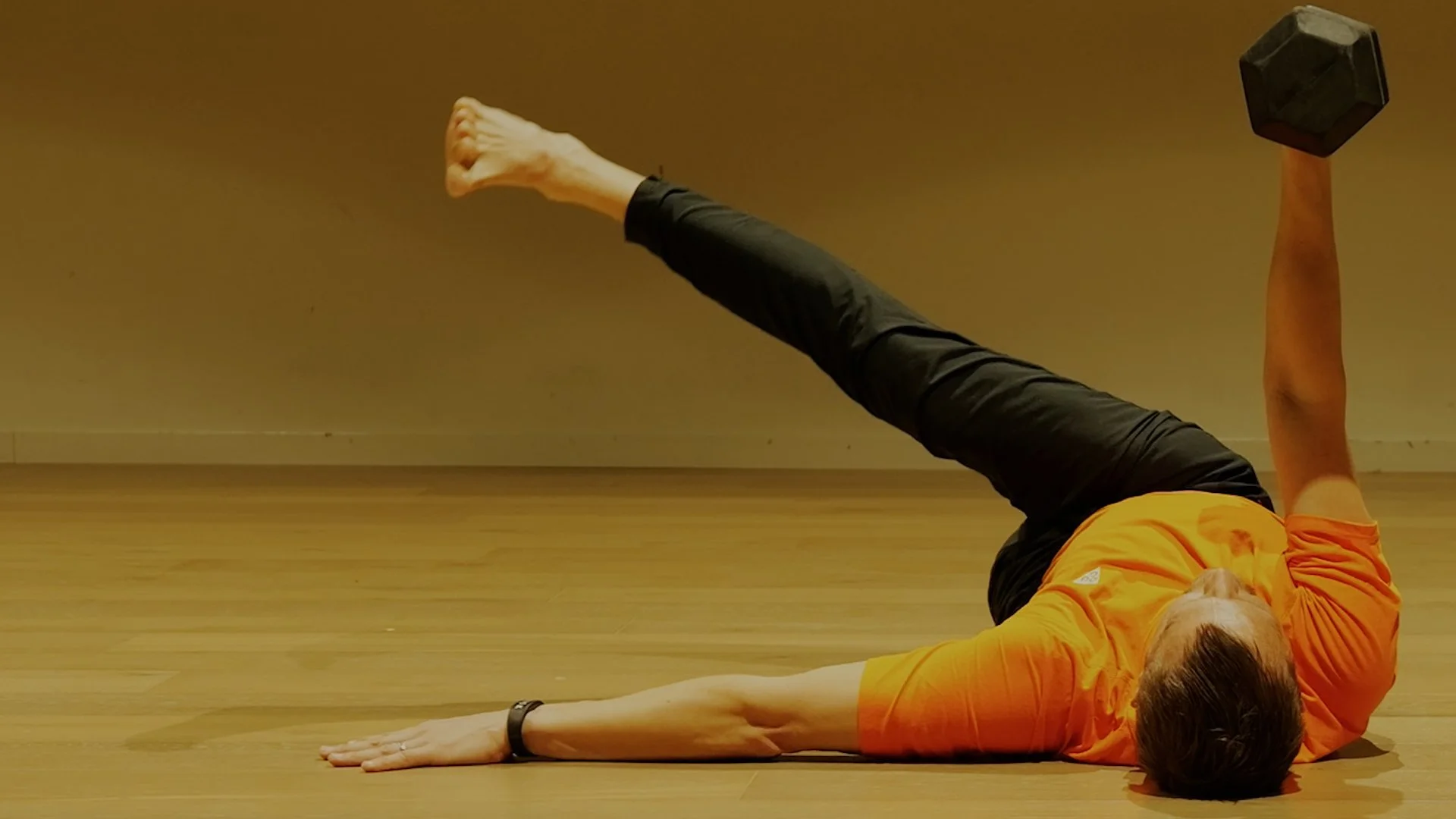
5 Elevate head and shoulder
Push into the supported arm on the ground, elevate the opposite shoulder, and roll off the head. Maintain the loaded shoulder vertically aligned and extend the arm towards the ceiling. Gaze towards the dumbbell.
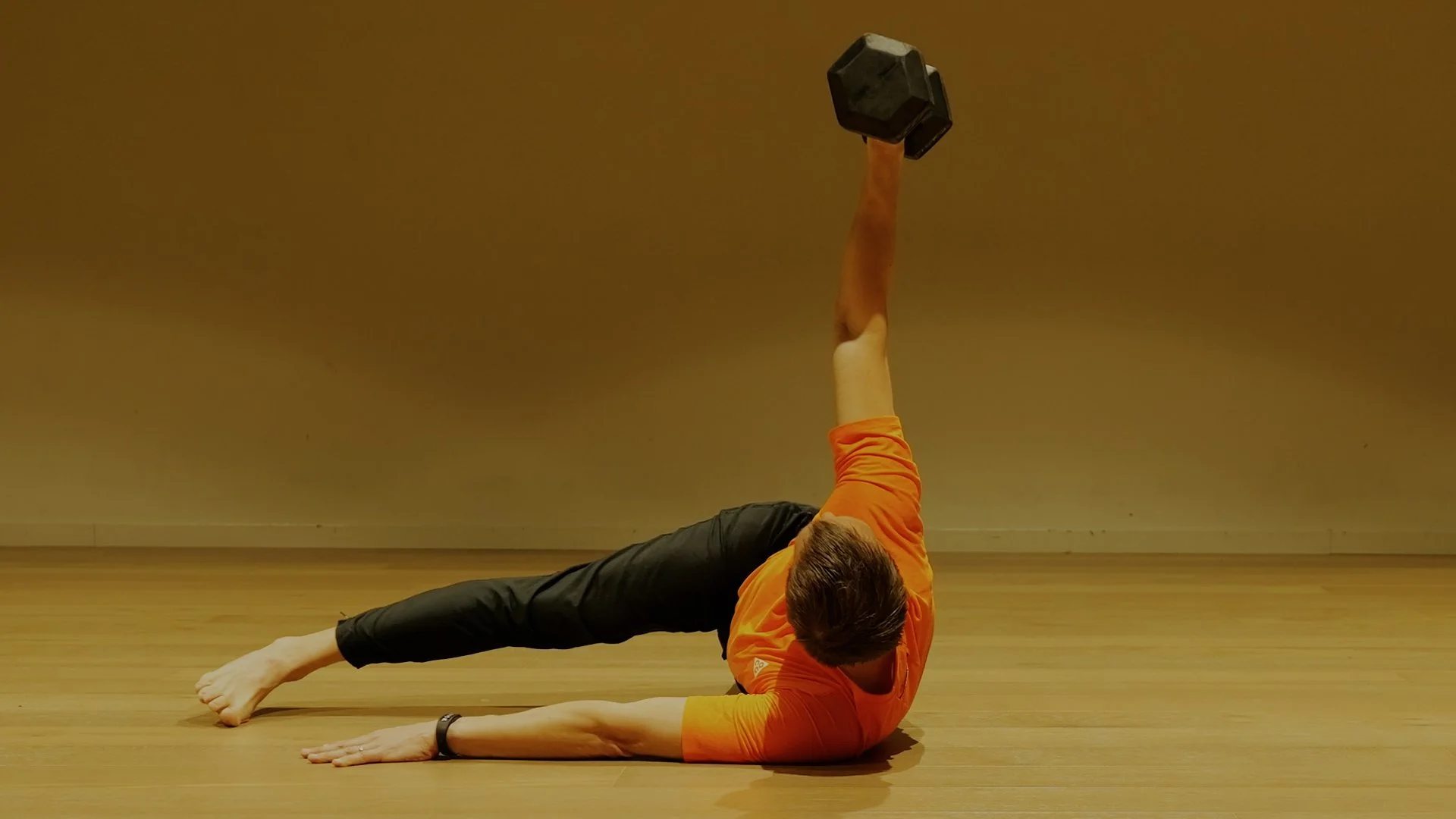
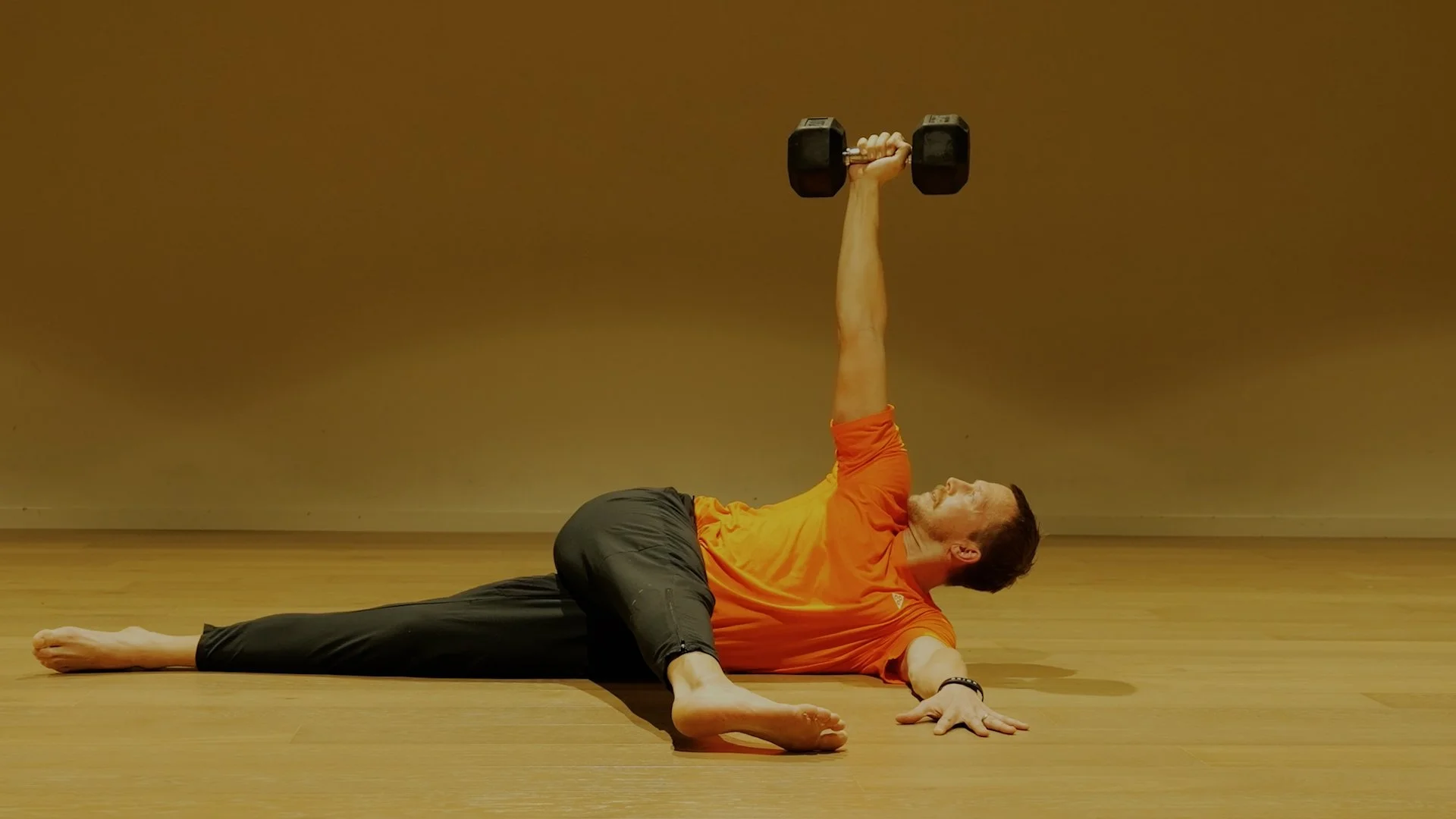
6 Slide foot sideways
Continue to slide the foot sideways along the ground. Position the foot as preferred. Coordinate the movement of the leg to enhance spine and hip motion.
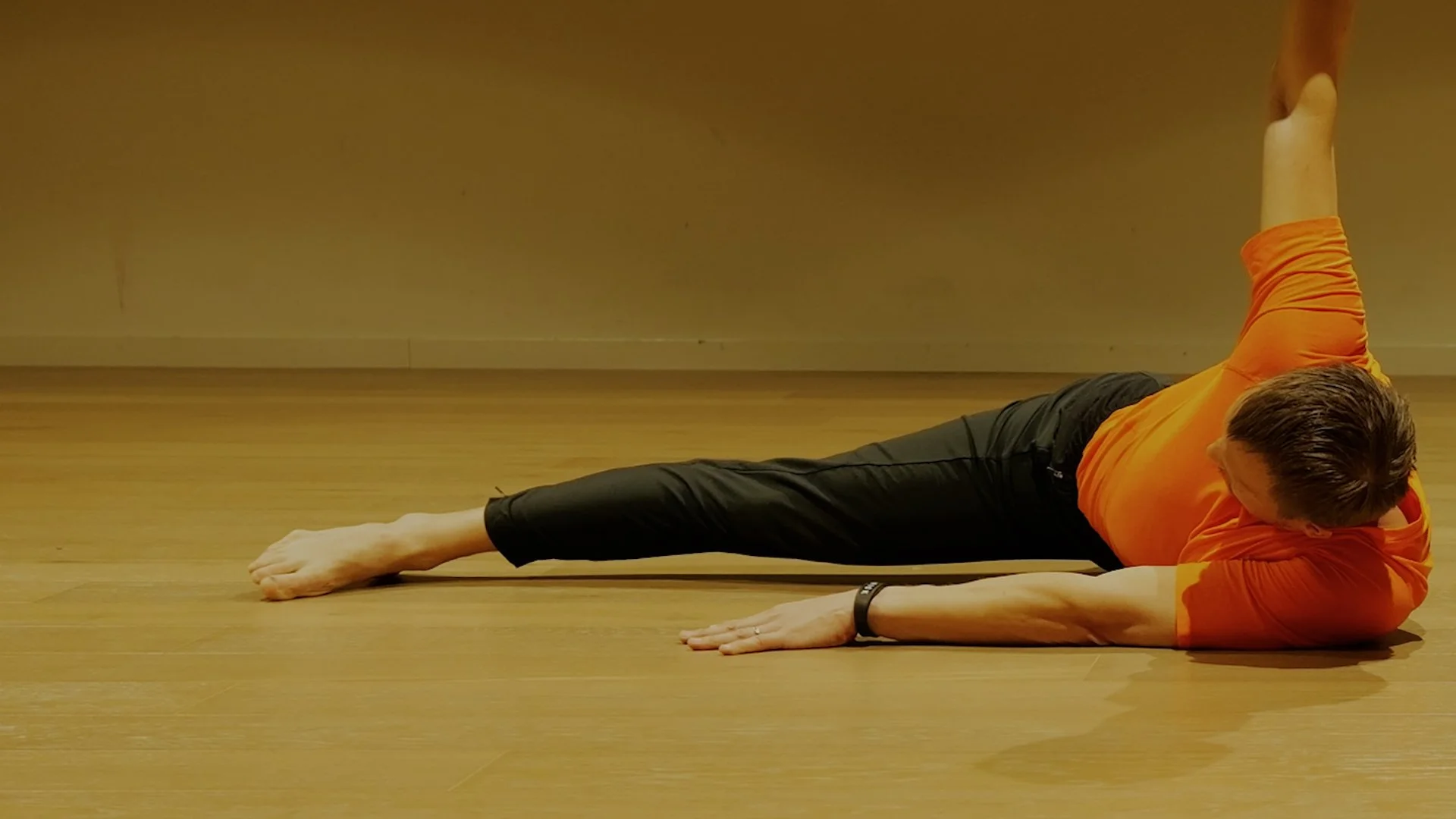
7 Hips down
Return your focus to the area around the hips and press the front of the pelvis into the ground.
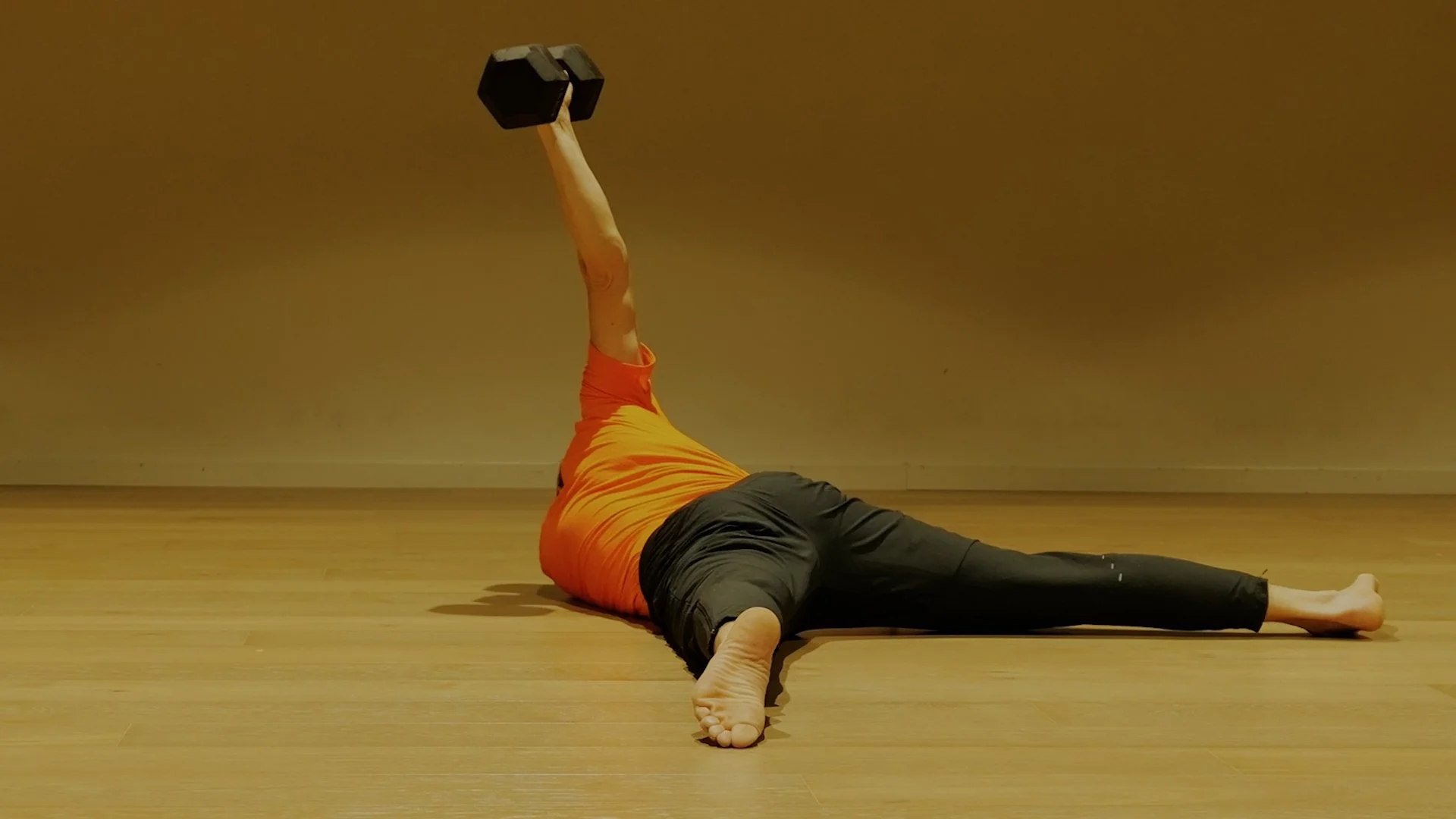
8 Turn head
Isolate a head rotation movement and continue to rotate as far as possible towards the shoulder on the ground. Keep pressing the arm as the head moves. These two opposing directions will help create a counterbalance. This part of the movement was inspired by Aimee Challies. Thank you once again!
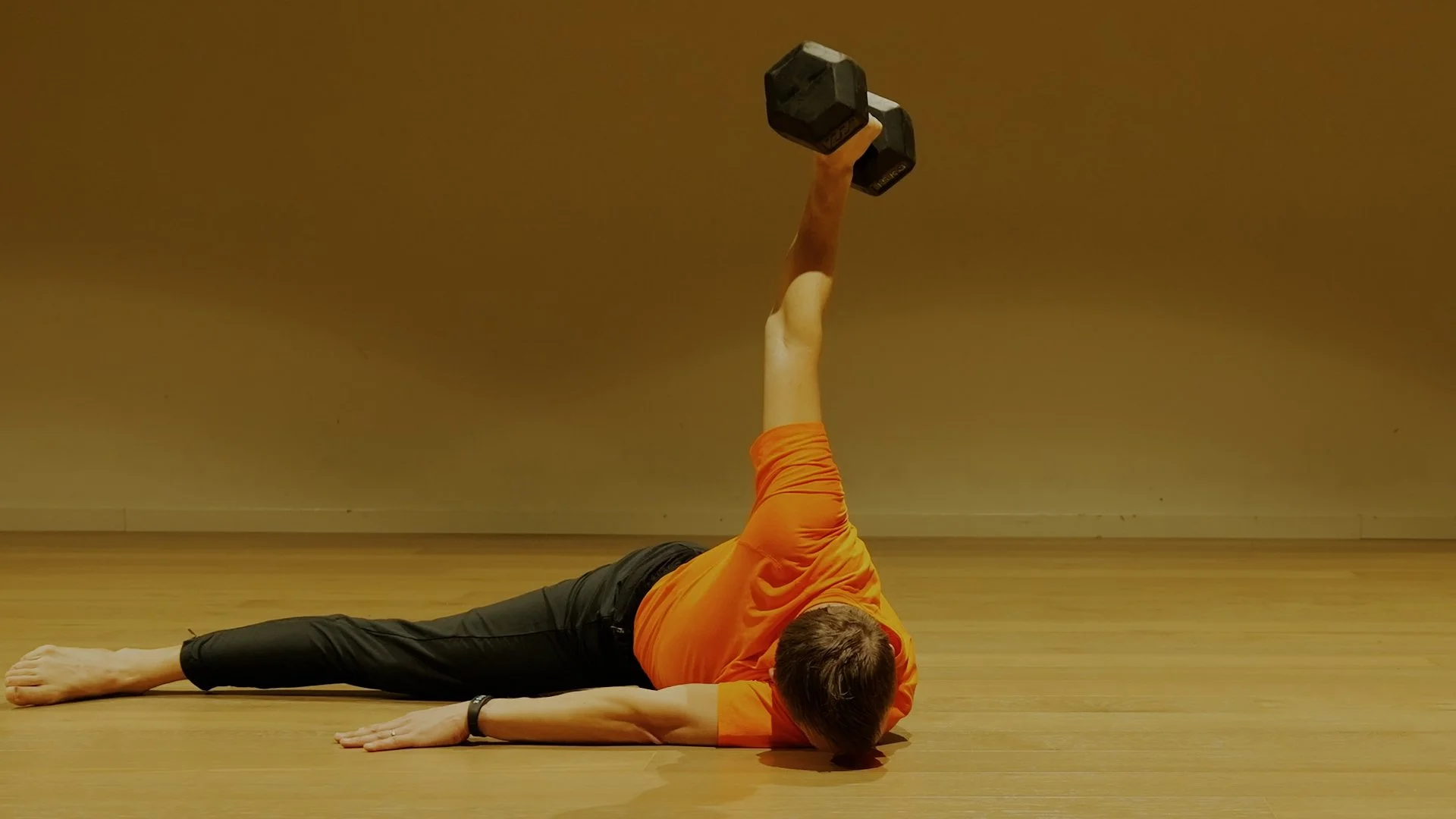
9 Return with head
Reverse the head movement.
10 Return with leg and spine
Return by sliding the leg and rotating the spine. Maintain the foot on the ground and move it into position as you press the opposite shoulder towards the ground.
11 Elevate the leg
Press into the arm on the ground and return with the leg while pressing the foot towards the ceiling.
12 Lower the leg
Return the airborne leg to the floor.
13 Roll up
Initiate the movement with neck flexion and continue to sit up using a rolling motion through the spine. Maintain the loaded shoulder in a vertical position, or extend the arm slightly forward to create some momentum for sitting up.
This is one way to time the movement. Is it the only way? No! Feel free to explore other approaches to timing.
Let me know if you have any questions!
//Magnus Ringberg